Verification research
How We Actually Evaluated okki-go: A Purchasing Officer's Notes From a 180-Person Company
2026-10-10 · Camille Ortega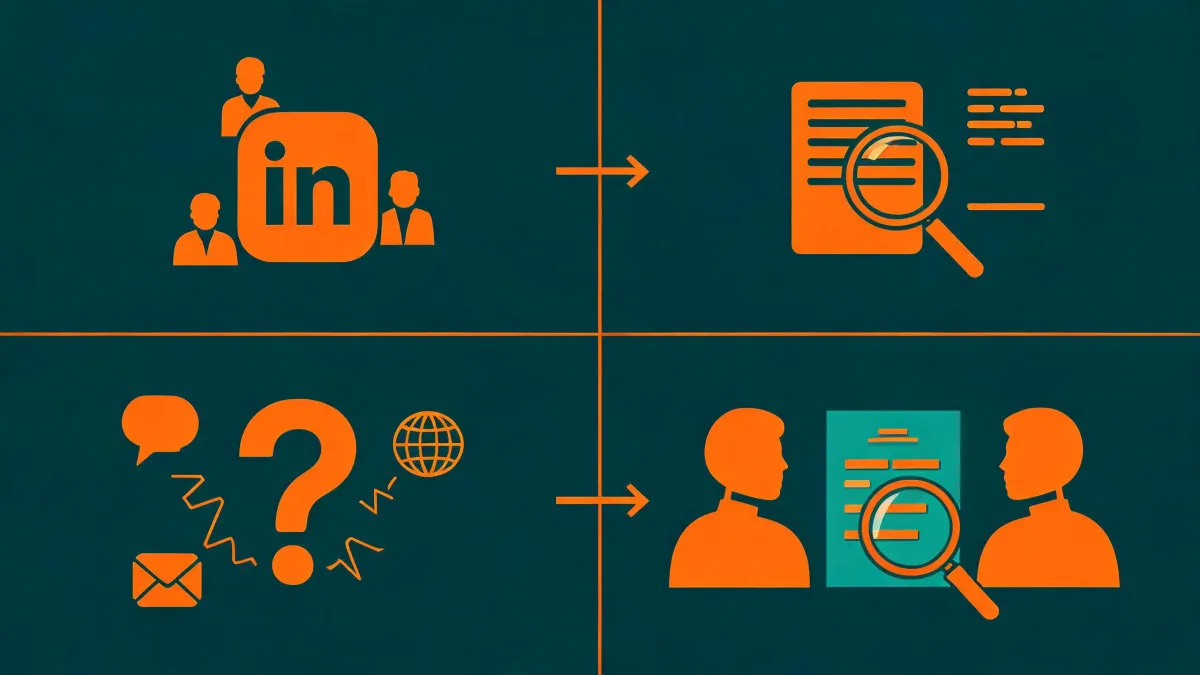
I need to say something upfront: I am not a salesperson. I do not run outreach. I do not know what a "buying intent signal" was before September, and if you had asked me last summer what email warmup meant, I would have guessed it had something to do with keeping a laptop warm.
I manage procurement for a 180-person B2B software company. Roughly $340,000 annually across 22 vendors, split between operations and finance. When our VP of Sales asked me in June 2025 to help evaluate the okki-go setup the SDR team had been trialing, my first thought was that this was well above my pay grade (it wasn't, but it felt like it).
The situation we were in
Our outbound team had four SDRs at the time—three, actually, we were down one after a departure in May, but the headcount was approved for four—and they were doing everything manually. LinkedIn research in the morning, list building by lunch, cold emails in the afternoon. Our reply rate had dropped from something like 4.5% to under 2% over about eight months. Nobody could explain why, which is usually a sign that the problem is the process, not the people.
Sales had already started trialing okki-go. My job was to figure out whether the configuration work was reasonable, whether the workflow fit what our team actually did day to day, and whether finance would approve the renewal. That's it. I was the person who checks the box, not the person who decides.
What I found over the next six weeks made me change my mind about a few things.
The part where I had to learn the vocabulary
The SDR lead, Marcus, sat me down for what he called a "30-minute overview." It took 90 minutes, and I took eleven pages of notes (admittedly, some of those pages were just trying to spell things right).
Three concepts I had to actually understand before I could evaluate anything:
- The LinkedIn automation platform angle. Okki-go treats LinkedIn activity as a data layer, not a channel. I had assumed "LinkedIn automation" meant auto-sending connection requests—which, frankly, sounded spammy to me. It's not that. It's mostly about reading who engaged with what, and pushing that into the outreach prep.
- The buying intent signal. This is the piece that actually made sense to me once I saw it. Okki-go pulls in signals like a prospect visiting your pricing page three times in a week, or a job posting that mentions a tool you compete with. Signals get weighted and routed to the SDR who owns that account.
- Email warmup. Marcus explained that when you connect new sending domains to an outreach tool, most providers will throttle or block you unless the domain has a sending reputation. Warmup is basically a controlled routine—low-volume sends between a network of accounts—that builds that reputation over 2 to 6 weeks, depending on the domain age and how conservative you are.
Here's the thing that was annoying to discover: nobody on our team had done warmup properly on our secondary sending domain. We'd been using it cold for four months. That alone probably explained a chunk of the reply-rate decline.
"Most teams skip warmup because it costs you three weeks of volume," Marcus told me. "Then they wonder why 40% of their sends go to spam. It's not a mystery—it's a tradeoff they didn't want to make."
Configuring okki-go: what it actually involved
I sat in on two configuration sessions. Not because I was going to change anything—I wasn't—but because the renewal request was going to finance, and I needed to know whether the setup matched the workflow the contract promised.
The okki-go configuration broke down into four pieces:
- Domain and mailbox setup. Two sending domains, three mailboxes each, with warmup started the day after the contract was signed. This took maybe two hours with a support rep walking them through it.
- ICP and signal filters. This was the fussy one. Each SDR set up their own filters for what counts as a "warm" prospect. One SDR was filtering too tightly—she had a rule that excluded anyone who'd visited the site in the last 24 hours, on the theory that same-day visits were just noise. Marcus overrode it. Our signal volume tripled.
- Waterfall enrichment mapping. Okki-go chains multiple enrichment providers in sequence. If provider A doesn't return a verified email, it goes to B, then C. We had to decide which providers we trusted and what our verification threshold was.
- The outreach preparation workflow itself. This is the piece I'd been hired (well, assigned) to evaluate. The workflow spits out a per-prospect brief each morning: recent LinkedIn activity, intent signals, enriched contact data, and a suggested opener the SDR could accept, edit, or discard.
What surprised me was how much of the workflow is about not sending. About half of what okki-go does is filtering out prospects who aren't worth the SDR's time. That's not the pitch you see on the homepage, but it's where the value actually sits for a small team.
The result, and where it didn't work
By the end of November, the team was averaging around 3.8% reply rate. Not back to the 4.5% high, but a real improvement from under 2%. Meeting-booked numbers went up more than the reply rate did—which, according to Marcus, is normal, because the intent signal layer is doing more of the work than the copy is.
Here's where I want to be honest, because that's what I gave feedback on to my VP: okki-go is not the right call for every team.
If you have fewer than two SDRs, you probably can't justify the configuration work. The initial setup is real—I watched it take two weeks of partial attention from Marcus, and he's good at this. With one person doing everything, that time comes out of pipeline.
If your ICP is genuinely narrow—say, you sell only to a specific vertical and you already know every account by name—the intent signal layer adds less than it costs. You already know who's in-market. You don't need a system to tell you.
And if your team isn't already disciplined about CRM hygiene, okki-go will surface that problem rather than fix it. Garbage in, slightly better-formatted garbage out.
What I'd tell another admin buyer
I came into this thinking my job was to check the invoice matches the contract. I left thinking my job included understanding the workflow enough to ask smart questions at renewal time. Those are different things, and only one of them is what procurement people are usually trained for.
Two things I'll do differently next time:
- Ask the vendor for a written breakdown of onboarding hours, in the SOW, before signing. Ours said "implementation support included"—which turned out to mean different things depending on who you asked.
- Insist on warmup starting in week one, not week four. Any tool with a sending component needs that runway, and it's a two-week cost you don't get back.
If I had to sum it up: okki-go is a good fit for teams of 3–15 SDRs who already have a process and need better inputs. It is a poor fit for two-person teams, teams with very narrow ICPs, and teams hoping the tool will substitute for having a process. If you're in one of those last three buckets, the honest recommendation—and I know this is unusual to hear from someone signing the renewal—is that you should probably look somewhere else first, and come back when the basics are in place.
That's not a knock on the tool. It's just what the last five months of watching it work (and not work) taught me.

Camille Ortega
Camille Ortega is an independent buyer-intent and visitor intelligence analyst covering intent data, sales triggers, website visitor identification, account matching, anonymous traffic, and go-to-market signals. She examines EU GDPR requirements alongside match confidence, false-positive rate, signal recency, account coverage, baseline conversion, lift, consent status, and activation latency. Her research helps marketing and sales teams judge whether signals improve prioritization, define responsible activation rules, and avoid treating weak identification probabilities as confirmed buyer interest.