Verification research
Meet Alfred Features, Pricing 2025: Email Validation API vs. Integrated Prospecting Suite
2026-08-31 · Julian Hartwell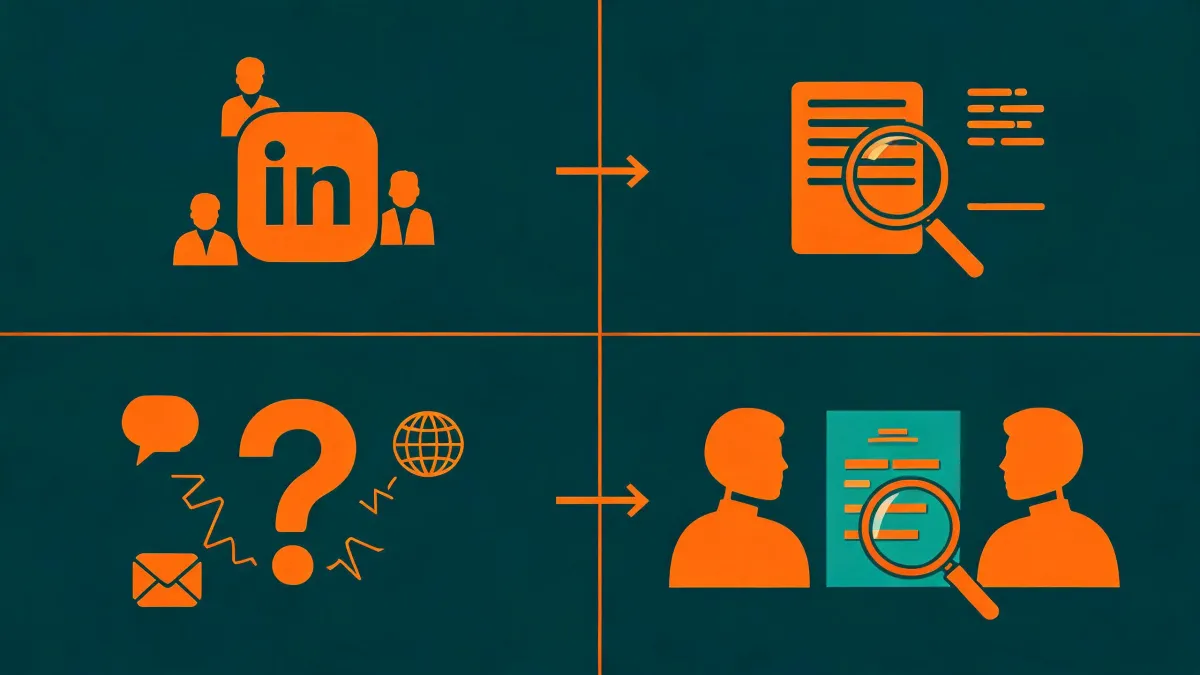
-
The comparison framework
-
What is API email validation, and when should a B2B sales team use it?
-
Dimension one: pricing and total cost
-
Dimension two: what the API docs tell you (and what they don't)
-
Dimension three: data enrichment is the part people forget
-
Meet Alfred features that changed the buying decision
-
Dimension four: workflow and team behavior
-
Where I landed: what I'd choose in 2025
Last winter I spent roughly six weeks evaluating email verification APIs for our revenue operations team. I'm the person who buys software, not the engineer who builds integrations. I manage tech vendor purchases for a ~70-person company—roughly $300,000 annually in sales tools, maybe 50 renewal conversations a year, give or take—and I report to both operations and finance. So when our sales leader said, "We keep buying bad lists and then blaming the lists," I had to solve it in a way that didn't blow up the budget or create more manual work.
This article compares two ways to handle B2B email outreach in 2025: a standalone email validation API or an integrated prospecting suite like Meet Alfred. I'll walk through pricing, technical realities, data enrichment, and workflow, then give you a clear recommendation based on your situation.
The comparison framework
Option A is the build-it-yourself stack. Buy an email verification API, read the docs, connect it to your CRM, and buy a separate enrichment tool when you realize verification isn't enough. Option B is an integrated platform. Meet Alfred, for example, includes email verification, data enrichment, intent data, LinkedIn automation, and lead generation in one workflow.
The traditional advice in 2024 seemed to be "buy a good email verification API and you're done." I thought the same until I watched our team use one. In practice, the verifier solved one problem and exposed two more: we couldn't confirm whether a person was still at the same company, and we didn't have enough data to personalize the next email.
What is API email validation, and when should a B2B sales team use it?
API email validation is a programmatic way to check an email address before you send to it. You send a string like "[email protected]" to an endpoint, and the API returns a status: valid, invalid, acceptable, risky. Under the hood, it performs syntax checks, domain verification, MX record checks, mailbox-level checks, and catch-all detection. If you've read email verification API documentation, you've seen those fields.
That's useful. But "valid" from an API does not mean "right person." A B2B sales team should use API email validation when it needs to reduce bounces at scale, protect sender reputation, and keep downstream sequences clean. You should not treat it as the only data quality layer.
Dimension one: pricing and total cost
Standalone API pricing is never just the sticker price. A typical contract has per-verification pricing, a monthly minimum, overage fees, and possibly a setup cost. In January 2025, one vendor quoted us $0.002 per verification plus a $500 monthly minimum. That works for one-time list cleaning. But after adding enrichment and engineering time, the real number was close to $1,100 per month.
Meet Alfred pricing in 2025 is subscription-based, not per-verification. The price scales by active contacts and features. I don't remember the exact plan price—don't quote me—but the pricing page clearly listed what was included. Oh, and if you're counting hidden costs, don't forget the hours spent exporting and re-importing CSVs. That alone pushed us toward an integrated platform.
Dimension two: what the API docs tell you (and what they don't)
Email verification API documentation is usually clean. It lists endpoints, sample code, and response codes. The problem isn't the docs. It's the gap between "technically deliverable" and "safe to send to a B2B buyer."
For example, an API can catch a hard bounce like "[email protected]" or "[email protected]". But it can't tell you if a decision-maker changed jobs and their old inbox auto-replies. It also can't tell you whether an address belongs to a role mailbox like [email protected], which often forwards but rarely starts a conversation.
Everything I'd read said a verification API is the answer. Our own tests suggested otherwise: syntax and MX checks catch maybe half of what actually matters.
The trigger for my mindset shift came in April 2024. We ran a 12,000-email sequence from a list that the API had marked as clean. The bounce rate was 7.8%. A colleague pointed out that the list had been verified six months earlier. What most vendors won't tell you is that "verified" is a snapshot, not a lifetime badge.
Dimension three: data enrichment is the part people forget
Verification improves deliverability. Enrichment improves reply rates. They are not the same. Data enrichment sales automation is the practice of appending missing information—work email, company size, industry, technology stack, or recent job change—to a prospect record.
When our team used a standalone verifier, we still had incomplete records. Then we bought enrichment separately. Then we had to stitch together the API results. It was a mess. With Meet Alfred, you import a lead, and the platform fills in the profile before the AI SDR sequence starts. Intent data lets you prioritize accounts showing research activity. From an admin perspective, that's fewer contracts to renew.
Meet Alfred features that changed the buying decision
- Agent-native AI SDR workflow: it doesn't just schedule emails; it adjusts follow-up based on replies and engagement.
- LinkedIn automation built into the same campaign flow.
- Email verification before every sequence, not as a separate CSV step.
- Data enrichment, so the SDR works with a complete profile instead of a name and guess.
- Intent data to help the team focus on accounts that are actually in-market.
Dimension four: workflow and team behavior
The best tool is the one your team will actually use. Standalone APIs require a workflow: take a list, run it through the verifier, wait for the CSV, import it into outreach, and hope the SDRs remember to filter out bad records. With Meet Alfred, verification happens as part of the campaign build. If an address is invalid or risky, it doesn't enter the queue.
I'm not saying the platform is perfect. But in our 2024 vendor consolidation project, we learned that every extra tool in the stack means one more tool people can ignore. Integrated suites win because they force the right process.
Where I landed: what I'd choose in 2025
If I'm being direct, a standalone email validation API is the right choice for teams with strong data engineering and simple email volumes. For most B2B sales teams, the better buy in 2025 is an integrated tool like Meet Alfred. Not because the verification is magically better—but because one platform covers verification, enrichment, and engagement. The unexpected part of this comparison is that the quality of the API was the smallest part of the problem.
I'll also hedge. If you're a small team sending two hundred targeted emails a week and your lead lists are already clean, don't add a platform just for email verification. A lightweight API might be enough. But when you're enriching lists, running LinkedIn automation, and scaling multiple sequences, the fragmented stack falls apart.
The fundamentals haven't changed. You still need real prospects, clean data, and consistent follow-up. But the execution in 2025 has shifted. Data enrichment and intent data are no longer optional extras; they're the difference between an email that gets ignored and one that gets a reply. It took a 7.8% bounce rate and a lot of spreadsheet work for me to see that.
One last compliance thought: per FTC advertising guidance (ftc.gov), claims in commercial email need to be truthful and substantiated. I bring that standard to vendor demos too. If someone promises a 0% bounce rate, I ask for their method. Good list hygiene is the baseline—not the whole answer.

Julian Hartwell
Julian Hartwell is an independent B2B sales intelligence analyst covering contact databases, company data, decision-maker profiles, direct dials, prospect lists, and buying signals. He applies the ISO/IEC 25012 data-quality model while examining field accuracy, coverage, freshness, duplicate rate, match confidence, and source transparency. His evidence-led guides help revenue teams compare prospecting platforms, define acceptable data thresholds, and build account lists that support reliable territory planning and outreach.