Verification research
OkkiGo Data Enrichment and AI Sales Assistant: When to Use It and How to Run the Okki Go Install Command
2026-09-07 · Julian Hartwell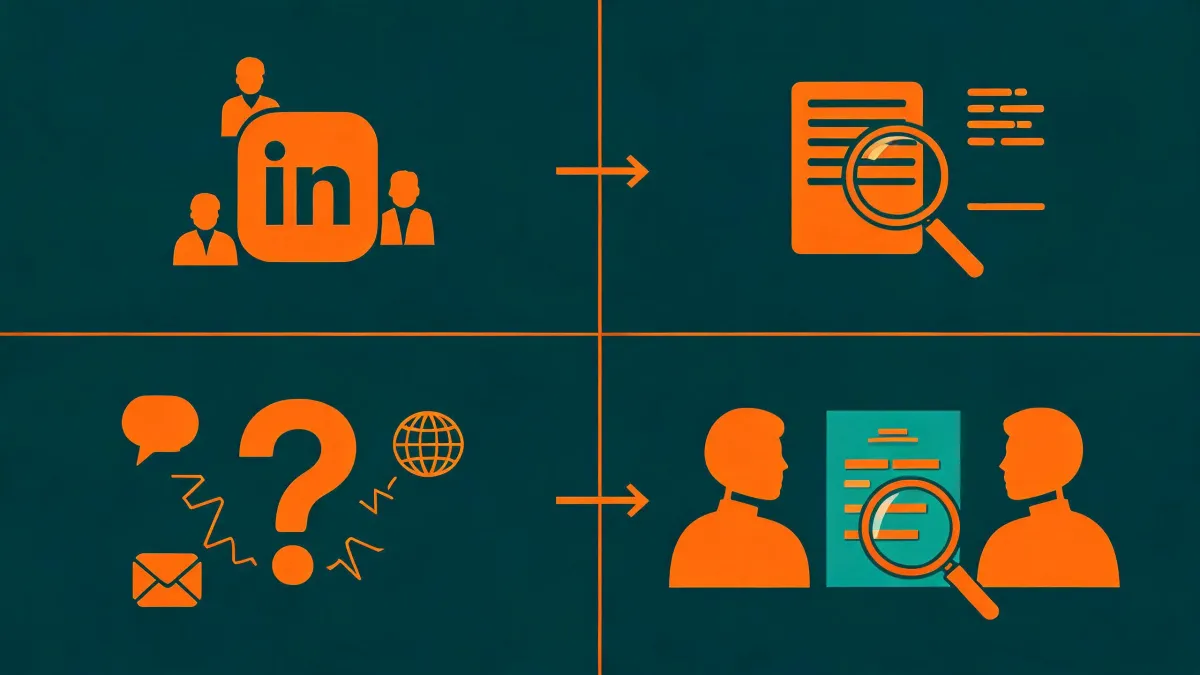
OkkiGo is not an SDR replacement. If your only reason for evaluating an AI sales assistant is to avoid hiring salespeople, don’t buy it yet. But for a B2B sales team that already has a defined ICP, a working outbound channel, and someone who will supervise automation, OkkiGo is a rare purchase: it earned renewal. In our nine-week pilot, five SDRs worked the same lists and the same offer, yet they researched roughly 40% more accounts per week and booked about 25% more meetings from outbound activity. That wasn’t because the AI wrote magical emails. It was because data enrichment and routing changed who got contacted first.
I’m the office administrator who runs procurement for revenue software at a 120-person B2B company. I don’t carry quota. But I manage the purchase, the security review, and the part where Sales Ops says “we are never using this” after I have already paid. That gives me a different view on AI sales assistant features: I care less about the demo and more about adoption.
What the OkkiGo data enrichment feature actually changed
From the outside, data enrichment looks like a lookup: you hand it a company or contact, and it returns missing fields. That is the surface illusion. The reality is that OkkiGo data enrichment became a filter and routing layer before any email automation ran. In our first pilot, the sales team loaded a raw list of leads that SDRs had been building manually. OkkiGo didn’t simply append fields. It pulled from multiple sources, verified what it could, scored the account with intent and firmographic data, and then placed only the contacts that made sense into sequence queues.
The practical difference is waterfall enrichment. Instead of relying on one provider and accepting blanks as final, OkkiGo works through enrichment sources until it has enough information to route the prospect meaningfully. If a field can’t be verified, the record doesn’t get blindly scheduled. That meant fewer sends to incomplete or irrelevant contacts, and human reviewers only had to judge a backlog that was actually relevant.
This surprised me because I initially expected the AI sales assistant features to be about writing emails. The draft was fine—or rather, it was better than fine, but not dramatically better than a solid SDR template. Our biggest gain came before the writing. The AI was deciding whether an account deserved contact at all. That is the causation reversal people miss: the tool didn’t get better replies because it wrote smarter sentences. It got better outcomes because it stopped us from wasting touches on accounts that fit our initial list but not our real ICP.
We also had a vocabulary mismatch early on. Sales Ops said “lead enrichment.” I heard “append phone numbers.” OkkiGo’s docs said waterfall enrichment, agent-native prospecting, and intent data. We were using the same words but meaning different things. It only made sense when we looked at a single example: enrichment isn’t just what data gets added; it’s what happens next with that record.
How to run the Okki Go install command without turning it into a project
The Okki Go install command is one of the easiest parts of the rollout. Since the exact command is generated per workspace, I’d be careful with any blog post that gives you one universal command. When we started, I logged into OkkiGo, copied the installer from the setup screen, opened a terminal in our pilot environment, and ran it. That took about five minutes. Maybe four—I didn’t time it. The longer work was connecting the CRM and deciding which account owners could see sensitive data.
If you’re asking how to run the okki go install command, here is the process we followed:
- Create an OkkiGo workspace for the pilot, not the full production CRM environment.
- Copy the generated install command from the OkkiGo setup page.
- Open a terminal in the environment that will house the integration, and run the command.
- Authenticate with the CRM using an API key or OAuth, but restrict permissions to pilot segments.
- Run a small test on 20–30 contacts before importing a big list.
That last step matters more than people think. When I see a failed sales tool rollout, it is rarely because the install command was hard. It is because someone connected the tool to the whole CRM, sent automation to a messy list, and then blamed the platform.
AI sales assistant features: when should a B2B sales team use them?
Let me answer the search-style question directly: an AI sales assistant feature in OkkiGo is a research and execution layer that does the repetitive parts of outbound—building lists, enriching contacts, drafting initial emails, and handling email automation. It is not an autonomous rep. The “agent-native” part means OkkiGo can build the outreach queue from criteria rather than asking an SDR to save a list first. In practice, that turns hours of list work into a review task.
The OkkiGo sales prospecting features that made the biggest difference for us were not the flashiest ones. Deduplication, suppression lists, verification status, and sequence enrollment were the quiet parts that made email automation tolerable. A lot of teams already own a sequence tool and a separate data tool. OkkiGo combined them into one workflow, and that reduced the back-and-forth that usually kills tool adoption.
People ask when a B2B sales team should use an AI sales assistant. My answer, after watching this purchase from the buy side: use it when outbound is already a repeatable motion, when the team can describe its ICP in concrete filters, and when there is a person responsible for reviewing the queue before messages go out. Email automation should never run on autopilot for the first month. We kept human-in-the-loop approval so replies were routed to a real salesperson and the rep could take over the conversation.
I would hold off if none of those conditions exist. If the team has no CRM hygiene, if nobody agrees on the target account definition, or if leadership expects autonomous SDRs to fill the pipeline without process change, OkkiGo won’t fix that. It will just give you a better-organized way to send the same unqualified volume.
Where I’d still be careful, as the person approving the budget
OkkiGo can verify and enrich, but it can’t repair a damaged sender domain or fix an inbox that has never been warmed up. Those are separate problems. Don’t buy an AI sales assistant and expect email automation to solve deliverability issues that actually come from sending to stale lists or a poor domain reputation.
I’d also be careful if nobody owns the review process. The tools are more trustworthy when there is a human in the loop, but that only works if the human actually reviews. If your SDRs view the review queue as extra work, they’ll approve everything and you’ll be right back to spraying generic messages.
Finally, I wouldn’t buy OkkiGo for a team that is still prospecting fewer than a hundred accounts a month in a manual, relationship-heavy motion. If every account is a deeply personal, consultative effort, the ROI case gets weaker. OkkiGo is strongest when you have a defined market and need more precision and velocity than a small manual team can produce without losing quality.
I still remember the week Sales Ops first asked me to review OkkiGo. I expected another vendor claiming AI could replace the SDR team. Instead, the conversation turned to data quality, waterfall enrichment, and approval workflows. That is the right conversation to have before buying any AI sales assistant.

Julian Hartwell
Julian Hartwell is an independent B2B sales intelligence analyst covering contact databases, company data, decision-maker profiles, direct dials, prospect lists, and buying signals. He applies the ISO/IEC 25012 data-quality model while examining field accuracy, coverage, freshness, duplicate rate, match confidence, and source transparency. His evidence-led guides help revenue teams compare prospecting platforms, define acceptable data thresholds, and build account lists that support reliable territory planning and outreach.