Verification research
The $12,400 Prospecting Mistake: Okki Go, Sales Signals, and Cold Email Platforms
2026-09-24 · Erin Watanabe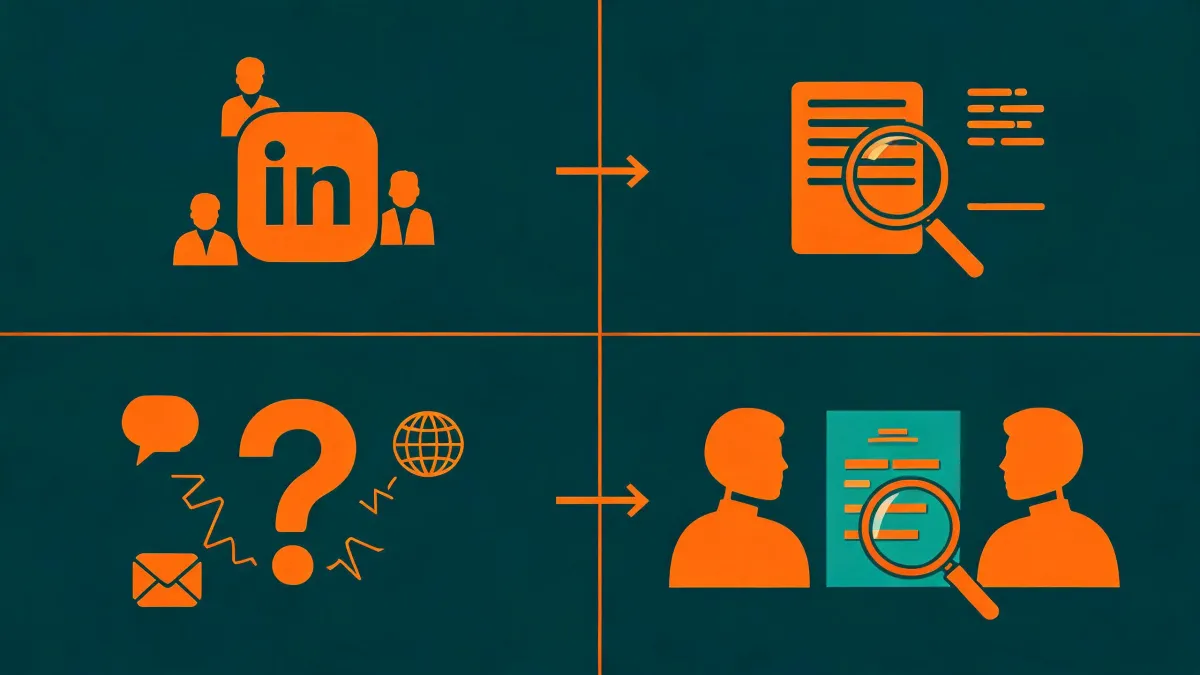
In Q1 2024, I signed off on a $12,400 outbound experiment. It wasn't one bad tool. It was a chain of small assumptions I didn't check. I thought our problem was lead volume. We had 3 SDRs, a warmed domain, and a stack that included LinkedIn Sales Navigator, an email verifier, an enrichment tool, and a new account research layer. I added Okki Go to the workflow because I wanted agent-native prospecting. That's what the category promised. The first four weeks looked fine on my screen. By week six, our reply rate had fallen from 3.2% to 1.1%, our bounce rate hit 7.8%, and our domain reputation was in the gutter. The result came back exactly like you'd expect: 12,000 contacts loaded, 3,800 emails sent, and a mess that took three weeks to clean up.
That's when I learned a lesson I keep on a sticky note now: 5 minutes of verification beats 5 days of correction. And the real mistake wasn't buying a prospecting tool. It was treating a tool as a skill.
The problem I thought I had: not enough leads
Honestly, I didn't think we had a targeting problem. We had an ICP. We had a value prop. We had case studies. What we didn't have, I thought, was enough at-bats. So I pushed for more volume. More contacts. More sequences. More channels. I wanted a prospecting tool that could pull accounts, enrich contacts, and drop them into our cold email platform with as little human friction as possible.
Okki Go was part of that push. I'd heard it described as an AI SDR-style prospecting tool. So I asked the obvious question: Is Okki Go a sales prospecting skill? No. It isn't. It's software. It can support account research. It can help surface context. It can sit inside a workflow. But it can't decide which accounts deserve outreach this week. That's the skill.
And that's what we skipped.
The deeper cause: we confused account research with sales signals
Here's the difference that cost us $12,400.
Account research tells you who the account is. Firmographics, headcount, tech stack, funding history, hiring trends, maybe a recent press release. It's the background file. Sales signals tell you why now. A new VP of Sales joined. The company just opened a London office. They're hiring 14 SDRs. They mentioned a competitor in a podcast. Their product page changed. Their intent data spiked on a category term.
Most buyers focus on database size and completely miss signal freshness. The question everyone asks is, How many contacts do you have? The question they should ask is, How fast do you refresh the signals that make those contacts relevant?
We had account research for days. We had sales signals for maybe 20% of the list. The other 80% got generic sequences. We called it personalization because we inserted a first name and a company name. That isn't personalization. That's mail merge with better branding.
People think better data causes better replies. Actually, better targeting causes better data to matter. Or both are caused by a defined ICP and a clear trigger. If you don't have a trigger, even perfect email verification and enrichment just help you reach the wrong person faster.
I don't have hard data on industry-wide reply lift from signal-based outreach. What I can say anecdotally is that across our 14 campaigns, the ones built on fresh signals beat our static lists by a wide margin. Not 2x. More like 3.4x in positive replies, and maybe higher in meetings booked. I wish I had tracked it more carefully from the start, because I'd love to show the full picture.
The cost of skipping signal discipline
When I compared our Q1 2023 static lists and Q3 2024 signal-based lists side by side—same ICP, same offer, same SDR team—I finally understood why signal freshness matters more than database size.
The Q1 2024 mess broke down like this:
- $6,800 for annual tool seats and data credits—or rather, $12,400 when you count the wasted SDR hours and the list cleanup.
- 3,800 emails sent to contacts with stale or missing signals.
- 7.8% bounce rate on one segment. The verifier didn't catch everything—not even close.
- Three weeks of paused outbound while we repaired domain reputation.
- Two SDRs spending most of a month on manual cleanup instead of conversations.
- One very awkward review with our VP of Sales.
The worst part wasn't the money. It was the credibility. When you tell leadership that a new prospecting tool will fix pipeline, and then pipeline drops, you don't get a lot of second chances. I should add that we had warmed the domain for eight weeks before this. That's what made it sting. We did one thing right and then undid it with volume.
According to Gartner's 2023 B2B buying research, buyers spend only about 17% of their buying journey with all potential suppliers. That's not much time. If you reach out without a relevant signal, you're not competing for that 17%. You're just adding noise (Source: Gartner, 2023; verify current data).
The checklist that fixed it
After the third rejection in Q1 2024, I created our pre-check list. It's not fancy. It's just the stuff we should have done before loading 12,000 contacts. We've caught 47 potential errors using this checklist in the past 18 months.
- Define the ICP and the disqualifiers. If an account doesn't match both, it doesn't go in the sequence. No exceptions for logos.
- Separate account research from sales signals. Okki Go account research can help you build the background file. It doesn't replace a trigger. Ask: What changed in the last 30 days that makes this relevant?
- Score signal freshness. A funding round from six months ago is not the same as a funding round from last week. We use a simple 1–5 scale. Anything below 3 gets a different play or no play.
- Verify email and domain before send. Not just syntax. Check catch-all domains, recent bounce history, and role-based inboxes. If it's risky, remove it.
- Use a cold email platform only when you have something worth sending. More on that below.
- Keep a human in the loop. No fully automated sequence goes out without an SDR reviewing the first 50. After that, spot-check 10% per campaign.
- Measure reply quality, not just reply rate. A positive reply from a non-ICP account is not a win. It's a distraction.
If you're evaluating Okki Go or any prospecting tool, run a small test first. Pick 100 accounts. Build half with account research only. Build half with account research plus a fresh sales signal. Compare positive reply rate, not open rate. That contrast will tell you more than any demo.
What is a cold email platform?
A cold email platform is software for sending and managing outbound email at scale. It usually handles sequencing, send scheduling, inbox rotation, reply detection, and basic analytics. Some platforms add deliverability tools, CRM sync, and AI writing. It is not a data source by itself, and it is not a strategy.
When should a B2B sales team use one?
Use a cold email platform when you have four things:
- A validated ICP and offer. You know who buys and why they buy.
- A repeatable signal. You can identify why now for a meaningful slice of your list.
- Compliance basics. According to the FTC (ftc.gov), CAN-SPAM requires accurate headers, a clear opt-out, and a physical address. It doesn't require prior consent for B2B email in the U.S., but you still have to follow the rules. For EU contacts, GDPR applies; the ICO (ico.org.uk) notes legitimate interest can be a lawful basis, but you must document a balancing test and honor data subject rights. Verify current requirements at ftc.gov and ico.org.uk as of January 2025.
- Reply capacity. If you can't handle 20 positive replies next week, don't send 5,000 emails this week.
Don't use a cold email platform when you're still figuring out the message. Don't use it when your list is a bought CSV with no signal column. Don't use it when your only metric is volume. That's how you end up with a $12,400 lesson.
The short version
The problem wasn't Okki Go. The problem wasn't our cold email platform. The problem was that we wanted a prospecting tool to be a sales prospecting skill. It isn't. The skill is the process: define the ICP, find fresh sales signals, do account research, verify the data, and keep a human in the loop.
Prevention over cure isn't a slogan for me anymore. It's the checklist. I keep it in our team wiki and review it every Monday. It's basically the most useful insurance we have. And it beats another three-week cleanup every time.

Erin Watanabe
Erin Watanabe is an independent CRM and revenue workflow analyst covering prospecting integrations, lead routing, sales pipelines, API synchronization, browser extensions, campaign attribution, and sales automation. She uses ISO/IEC 27001 control objectives while checking field mapping, sync latency, webhook reliability, duplicate rate, permission scope, error recovery, attribution consistency, and audit logs. Her systems guides help revenue operations teams connect acquisition tools, preserve trustworthy records, and evaluate whether automation reduces manual work without creating hidden data debt.