Verification research
What Is Okki Go? A $3,800 Outbound Mistake I Don't Want You to Repeat
2026-09-14 · Julian Hartwell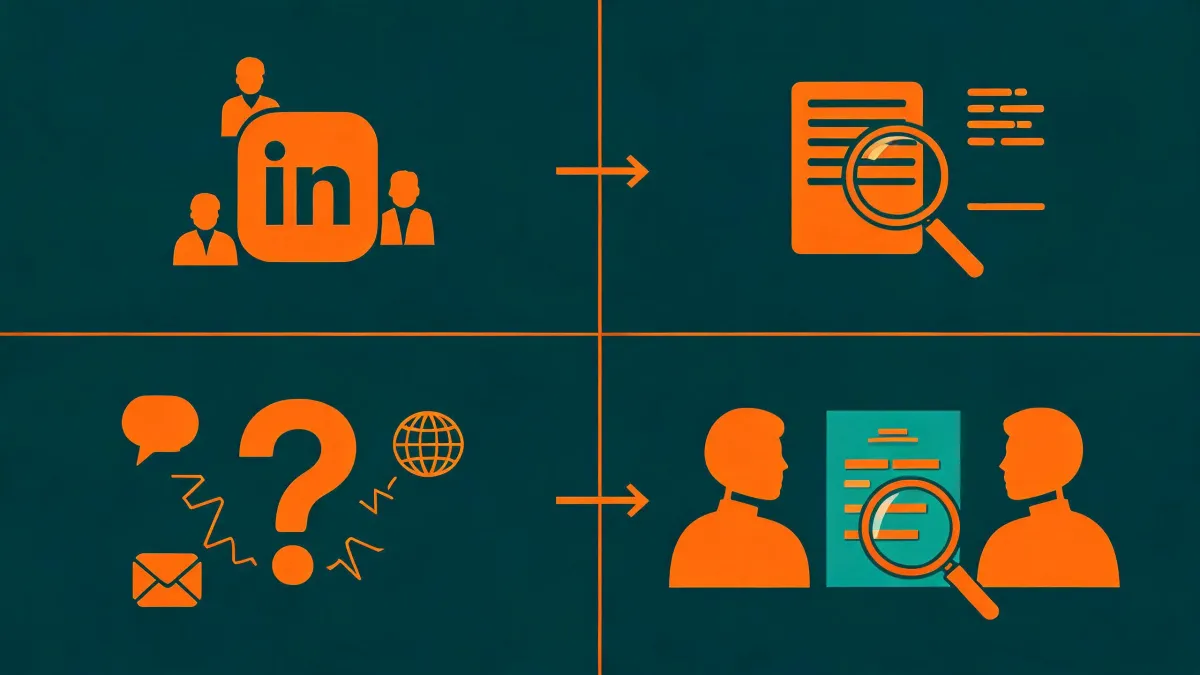
-
What I Thought Okki Go Was (and What It Actually Is)
-
The Okki Go Workflow for Outbound Agencies
-
The Part Where the Numbers Met Reality
-
What Should Revenue Operations Teams Evaluate in Account-Based Marketing?
-
Email Verification Features and LinkedIn Email Finder Checks I Now Refuse to Skip
-
What This Cost Us, and What I'd Do Differently
-
So, What Is Okki Go (okki-go)?
In March 2024, I was sitting in a shared doc with a fintech client's RevOps lead. We had 1,240 target accounts, a new ABM motion, and a sequencing tool that looked great in the dashboard. I hit launch on a 4,200-contact campaign at 4:47 p.m. By 9:12 a.m. the next day, the bounce report looked like a crime scene.
That campaign cost us roughly $3,800 in wasted tool credits, list refreshes, and SDR hours. It also cost something harder to invoice: the client's first impression.
I run outbound operations for a 14-person B2B agency. I've been doing this for almost seven years. I've personally made—and documented—nine significant mistakes, totaling around $22,000 in wasted budget. This one hurt because it was avoidable. It's also how I learned what Okki Go actually is, and why I now refuse to evaluate prospecting tools like they're just features in a spreadsheet.
What I Thought Okki Go Was (and What It Actually Is)
When I first heard about Okki Go (okki-go), I assumed it was another LinkedIn email finder with a verification add-on. You know the type: paste a LinkedIn URL, get an email, hope for the best. I figured the real work was still manual—list building, enrichment, sequencing, cleanup.
That was my initial misjudgment. Okki Go is not just a lookup tool. It's an agent-native prospecting workflow from okkigo. The pieces that matter are the workflow, not a single database. Waterfall enrichment pulls from multiple sources. Intent data helps you decide which accounts deserve attention now. Email verification features flag risk before you send. And human-in-the-loop outreach keeps a person on the hook when the automation wants to do something dumb.
Should mention: I didn't understand the difference until I watched a bad list move through a good workflow. The workflow caught problems that my old stack had been hiding.
The Okki Go Workflow for Outbound Agencies
Here's the version I wish I'd started with. It's not glamorous. It's just less stupid than what I did.
- Start with accounts, not leads. For ABM, the account comes first. Build the target account list around fit, intent, and revenue potential. Don't just pull every contact at a company and call it account-based.
- Use a LinkedIn email finder with confidence scores. A raw email is not enough. I want to know where it came from, when it was last seen, and how confident the source is. A row of 500 emails with no confidence score is a liability, not a list.
- Run waterfall enrichment. No single data source is complete. Waterfall enrichment tries one provider, then another, then another. It's way more useful than buying the same stale file from three places.
- Layer in intent data. Intent can tell you which accounts are researching a problem. It cannot tell you if they want your email. Use it to prioritize, not to justify spam.
- Verify before sequencing. This is non-negotiable. Syntax checks, domain and MX records, disposable domain detection, role account flags, catch-all handling, and risk scoring. No verifier is 100% accurate—if a vendor promises that, walk away. But verification can keep obvious garbage out of the send.
- Keep a human in the loop. Agents can draft, enrich, and sort. A human should still approve messaging for high-value accounts. The goal is not to replace SDRs. It's to remove the grunt work so SDRs can do judgment.
- Sync back to CRM. If the workflow doesn't write back to your CRM with clean fields and activity history, your RevOps team will hate you. Fairly.
The Part Where the Numbers Met Reality
The spreadsheet said we should go with a cheaper enrichment stack. It would save about 31% on data costs. My gut said the savings were fake because we'd pay for it in SDR time and client trust.
We ran a pilot with Okki Go on 180 accounts instead of rolling it out to the full list. I want to say it was a calm, scientific decision. It wasn't. It was me trying to avoid another 9:12 a.m. bounce report.
The pilot wasn't magic. We still had catch-all addresses that needed manual review. We still had to fix job titles and company names. But the workflow exposed the problems before they hit the client's domain. On that pilot, our bounce rate dropped from high single digits to low single digits. Reply rate went from 0.9% to 1.8%. Not a miracle. Enough to matter.
I have mixed feelings about intent data. On one hand, it helped us prioritize accounts that were actually in-market. On the other, stale intent is just expensive trivia. If the signal is six months old, it's a red flag, not a reason to send.
What Should Revenue Operations Teams Evaluate in Account-Based Marketing?
If you're a revenue operations team building ABM, don't let the tool demo turn into a feature checklist. Evaluate the workflow and the failure modes.
- Account coverage: How many contacts per target account? Three good contacts beat 30 random ones.
- Data provenance and freshness: Where did the email come from? When was it last verified? Can you export the audit trail?
- Intent signal quality: Is the intent topic relevant? Is it recent? Can you suppress accounts that already opted out?
- Enrichment waterfall: Does it pull from multiple providers, or just one database with a new logo?
- Email verification features: Catch-all handling, role account detection, disposable domains, risk scoring, real-time API, and CRM sync. Those are the deal-breakers.
- Human-in-the-loop controls: Can a manager approve sequences, lock messaging, and pause accounts? If not, you're one bad prompt away from a brand problem.
- Compliance: CAN-SPAM requires accurate headers and a clear opt-out. GDPR requires a lawful basis for processing EU personal data. As of February 2024, Google and Yahoo also require bulk senders to authenticate email and keep spam rates low. Your tool does not make you compliant by itself.
- Attribution: Can you tie replies and meetings back to accounts, campaigns, and data sources? If not, you're guessing.
Reference points: CAN-SPAM Act (FTC compliance guide), GDPR Article 6, and Google/Yahoo bulk sender requirements effective February 2024.
That's been my experience with mid-market SaaS and fintech accounts. Your mileage may vary if you're selling to a different segment.
Email Verification Features and LinkedIn Email Finder Checks I Now Refuse to Skip
When I evaluate a LinkedIn email finder, I look for coverage, refresh date, source confidence, and opt-out handling. If it can't tell me how it got the email, I treat it as unverified.
For email verification, I want syntax validation, domain and MX checks, disposable domain detection, role account flags, catch-all classification, and a risk score. I also want the verifier to run at the point of send, not just when the list was built. People change jobs. Domains expire. Lists rot.
No verification feature guarantees deliverability. That's not how email works. But skipping verification is a no-brainer in the wrong direction. It's like painting a logo on a moving car without checking the doors are closed.
What This Cost Us, and What I'd Do Differently
Looking back, I should have run the 180-account pilot before touching the full list. At the time, the client wanted speed, and I wanted to look responsive. I optimized for motion instead of quality.
I still kick myself for not documenting the client's opt-out process earlier. We had a suppression list, but it lived in a spreadsheet and a Slack thread. That's not a process. That's a future apology email.
The bigger lesson was about brand perception. The first email a prospect gets from you is not just a test of your copy. It's a test of your data hygiene. If the email bounces, if the name is wrong, if the personalization references a company they left two years ago, the prospect doesn't think, 'their tool had a bad data day.' They think, 'this company is sloppy.'
Quality is brand perception. You can save money on a list, a verifier, or a workflow. You will pay for it in reply rates, SDR morale, and client trust. That's the bottom line.
So, What Is Okki Go (okki-go)?
Okki Go is a way to run prospecting like an operation, not a pile of tabs. For outbound agencies, it's a workflow: account selection, LinkedIn email finding, waterfall enrichment, intent prioritization, email verification, human review, and CRM feedback. It doesn't replace your SDRs. It doesn't guarantee replies. It doesn't magically make bad ICP choices work.
But if you're a RevOps team evaluating account-based marketing, it gives you the questions to ask before you launch: Where does the data come from? How fresh is it? Who approved the message? What happens when the verifier says 'risky'? Those questions are boring. They're also the difference between a pipeline and a bounce report.
I learned that one the hard way. I'd rather you didn't.

Julian Hartwell
Julian Hartwell is an independent B2B sales intelligence analyst covering contact databases, company data, decision-maker profiles, direct dials, prospect lists, and buying signals. He applies the ISO/IEC 25012 data-quality model while examining field accuracy, coverage, freshness, duplicate rate, match confidence, and source transparency. His evidence-led guides help revenue teams compare prospecting platforms, define acceptable data thresholds, and build account lists that support reliable territory planning and outreach.